Nothing finishes a classic car like traditional black and silver plates. They’re not just a style choice, though – they’re only legal on certain vehicles. Here’s who qualifies.
In this guide
Who can use black and silver plates?
You can display black and silver plates on your vehicle if it was:
- built before 1 January 1980, and
- registered in the historic vehicle tax class (sometimes called “historic vehicle” or tax-exempt classic)
Vehicles that are over 40 years old can apply for the historic vehicle tax class, but the black and silver plate allowance is fixed to vehicles constructed before 1980. A 1985 car that’s now in the historic class still needs white and yellow plates.
What the plates should look like
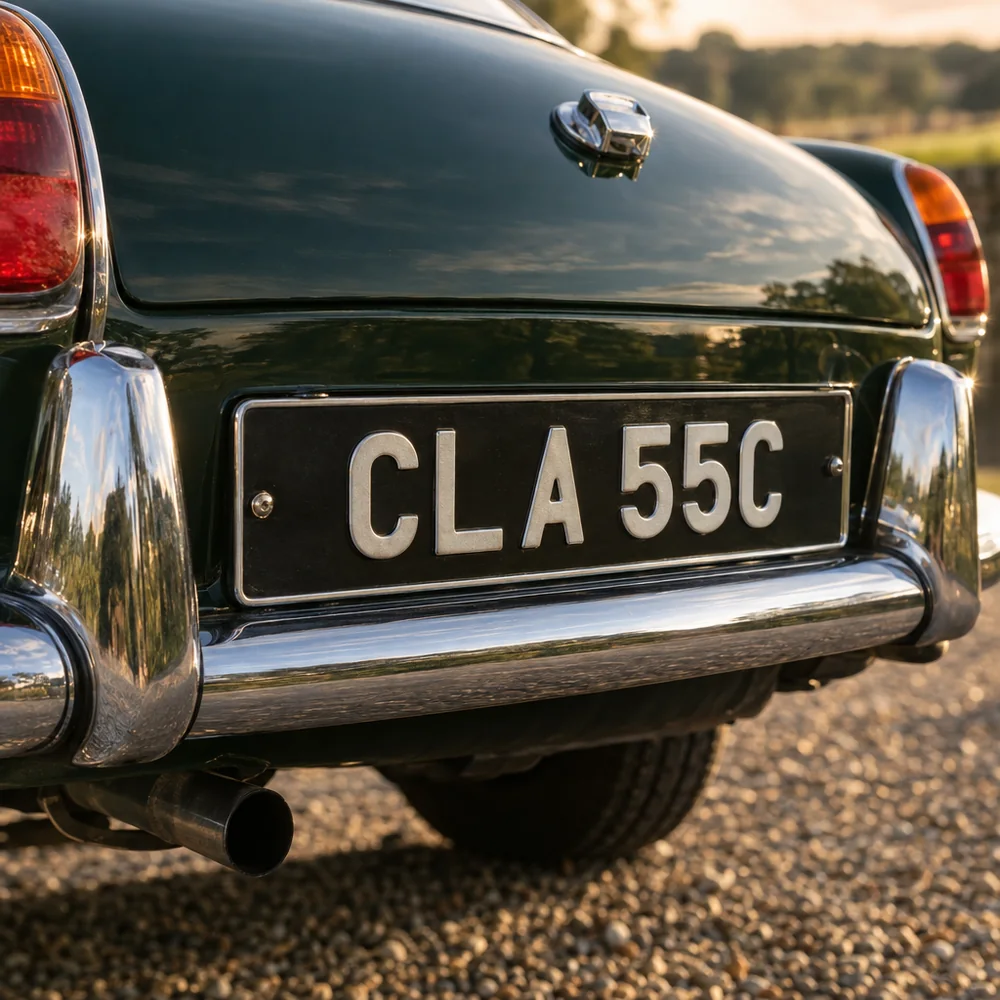
- Black background
- White, silver or grey characters
- Usually the traditional style for the era, often pressed metal or acrylic
What about everyone else?
If your car doesn’t qualify, black plates are a show plate only. Fitting them for road use risks a fine of up to £1,000 and an MOT fail. See illegal number plate fines and show plates explained.
Classic plates in our builder
Choose Road legal, tick Classic black & silver and we’ll make your plates with silver characters on black. You’ll be asked to confirm the vehicle qualifies.

Frequently asked questions
Can I have black and silver plates on a 1982 car?
Not for road use. The allowance is for vehicles built before 1 January 1980 in the historic tax class.
Do black and silver plates need the BS AU 145e mark?
The reflective plate standard doesn’t apply to traditional black and silver plates on qualifying vehicles. They should still use the correct characters and spacing.
Do I need to be in the historic tax class?
Yes – the vehicle must be registered in the historic vehicle tax class as well as being built before 1980.
Can I mix black and silver with a 4D style?
Yes – raised silver characters on black give a modern twist on the classic look.