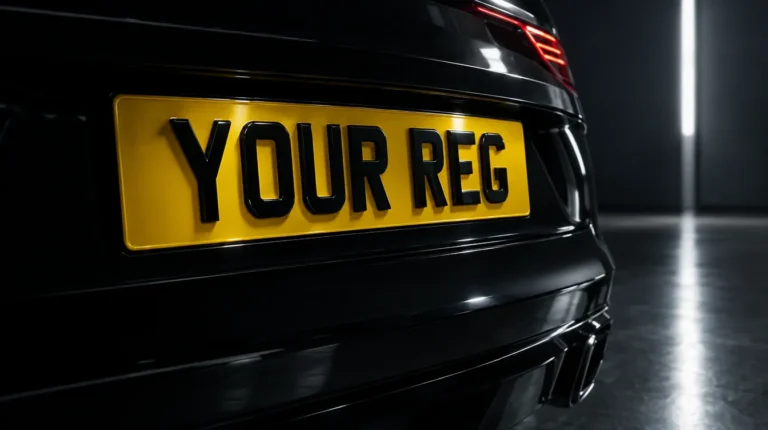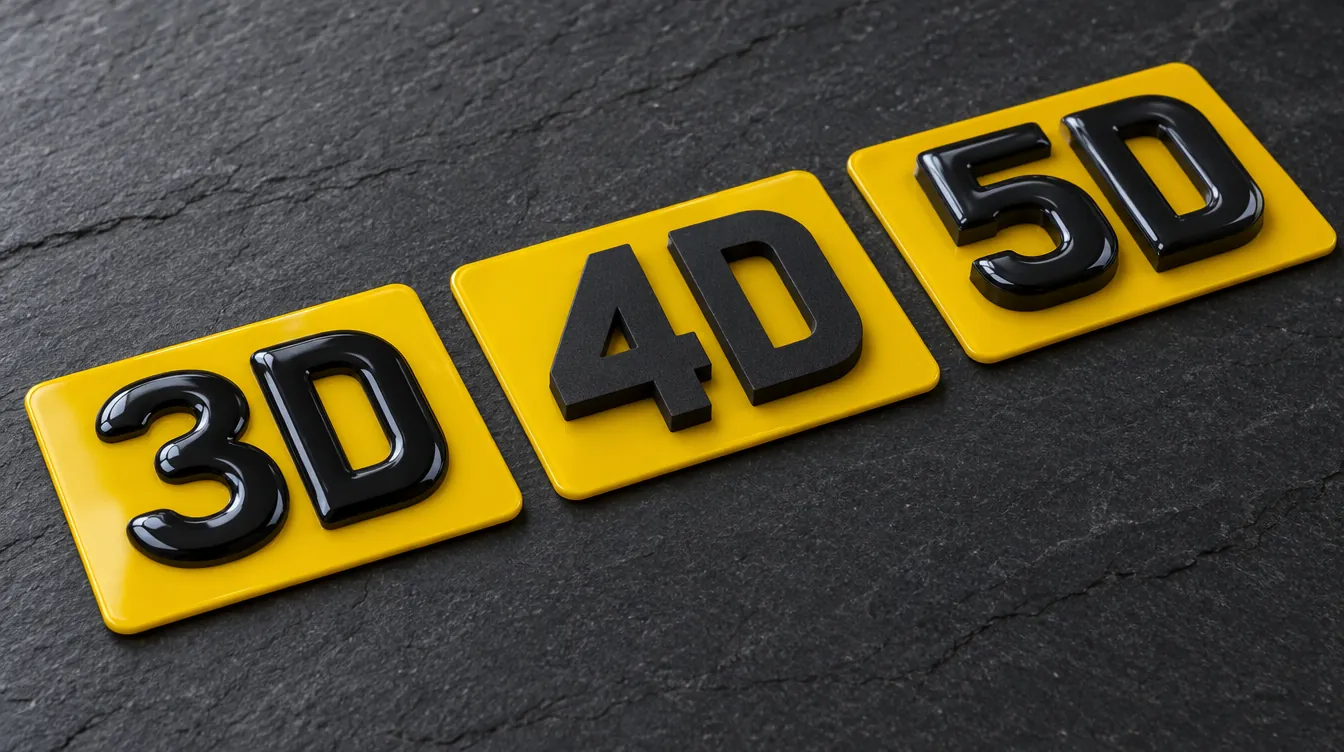
“3D”, “4D” and “5D” sound like a sci-fi upgrade path, but they’re simply trade names for different ways of raising the characters on a number plate. All three can be fully road legal. The differences are in how they’re made, how they catch the light and how they wear. This guide compares them side by side.
In this guide
At a glance
| Printed | 3D gel | 4D laser-cut | 5D (4D + gel) | |
|---|---|---|---|---|
| How it’s made | Printed characters | Printed, then domed with clear resin | Acrylic characters bonded on | Acrylic characters with a gel dome |
| Depth | Flat | About 1–2mm, rounded | 3mm or 5mm, square edges | 3mm or 5mm, rounded glossy top |
| Look | Factory, OEM | Wet-look gloss | Sharp, architectural | Deep piano-black |
| Best for | Budget, classic look | Subtle upgrade | Modern, bold cars | Premium and show-quality finish |
| Road legal | Yes | Yes | Yes | Yes |
Standard printed plates
The baseline. Characters are printed in black directly onto the plate, then sealed behind the clear acrylic face. They’re crisp, cheap and what most cars leave the factory with. If you want a perfectly OEM look, printed is the right answer.

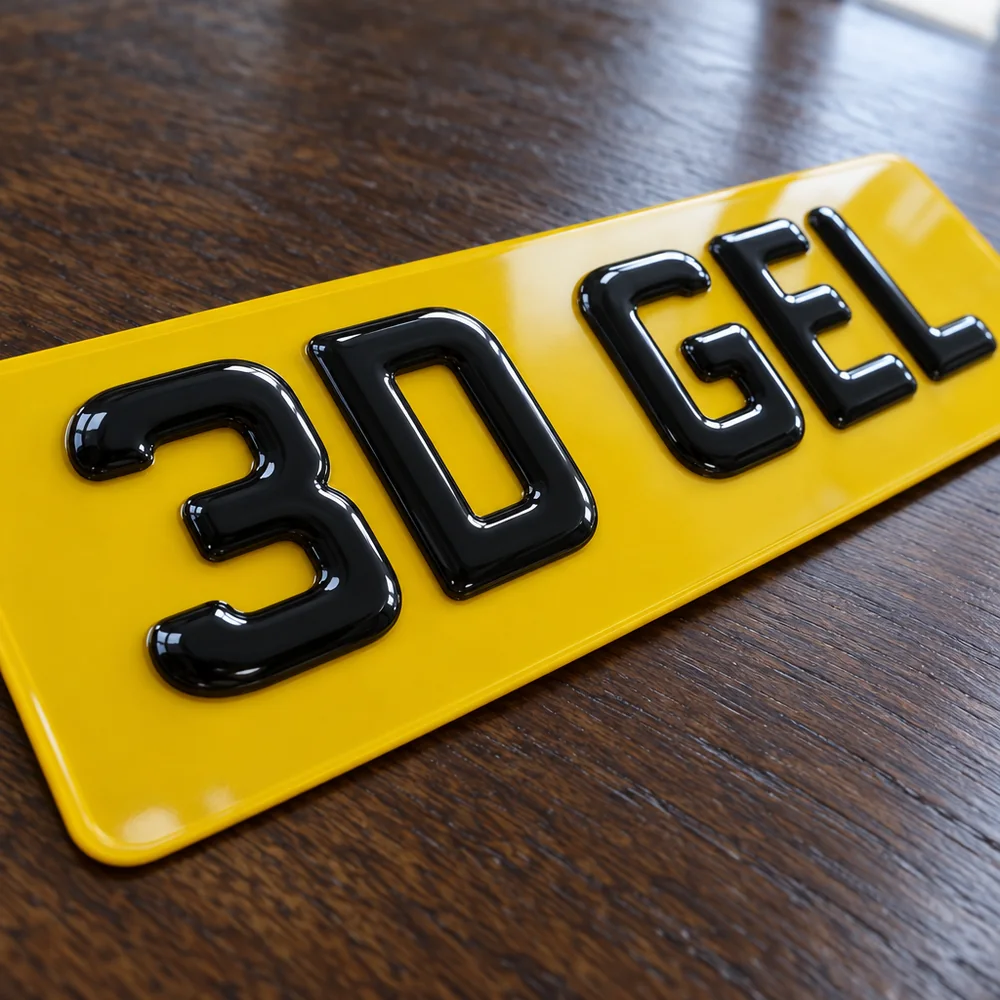
3D gel plates
3D gel plates start as printed plates. Each character is then covered with a measured dome of clear polyurethane resin, which cures into a soft, glossy bubble. The result catches the light beautifully without being shouty – the characters look wet and slightly raised.
Gel is flexible, so it copes well with car washes and small knocks. Over many years in strong sun, cheap resins can yellow, which is why a UV-stable resin matters.
4D laser-cut plates
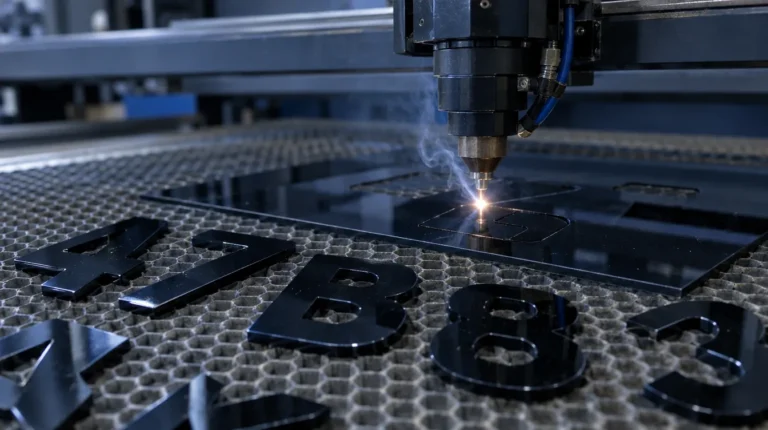
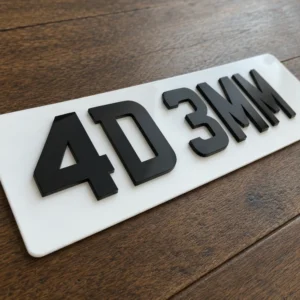
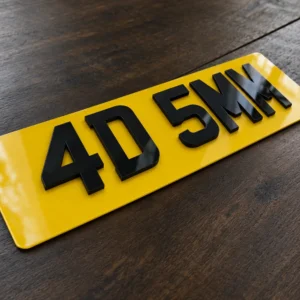
4D plates use characters laser-cut from black acrylic sheet and bonded to the plate face. They come in two depths:
- 3mm – a crisp, clearly raised look that suits most cars
- 5mm – the deepest standard option, with strong shadows and real presence
The square-cut edges give 4D its distinctive, architectural look, and the shadows change as you walk around the car. See how they’re produced in how 4D number plates are made.

5D plates (4D gel)
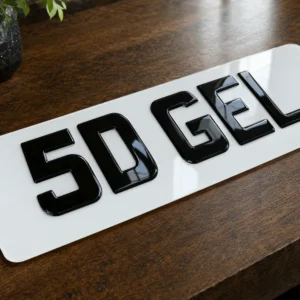
5D combines the two: laser-cut 4D characters with a gel dome on top. You get the depth of 4D and the glossy, liquid finish of gel – the deepest-looking plate we make, and the one most often chosen for prestige and performance cars.

Durability and care
| Scratch resistance | Car wash | Cleaning tips | |
|---|---|---|---|
| Printed | Excellent – protected behind acrylic | Fine | Any soft cloth |
| 3D gel | Good – flexible resin | Fine | Avoid stiff brushes on the domes |
| 4D | Very good | Fine, avoid jet-washing edges at close range | Soft brush around edges |
| 5D | Very good | Fine | Microfibre only on the gel |
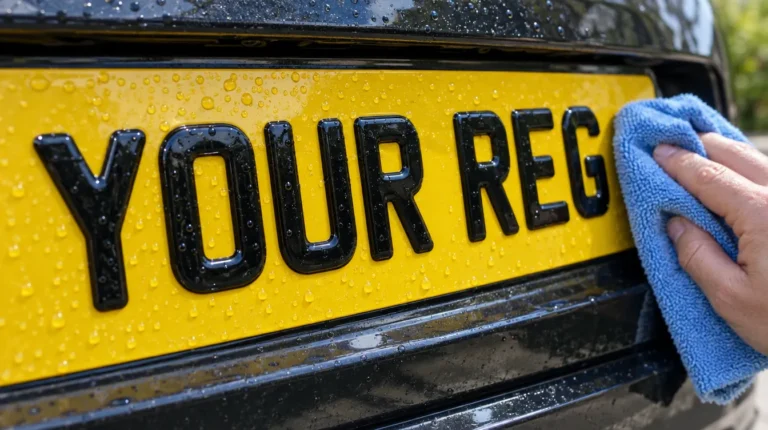
More in how to clean and care for 3D and 4D plates.
Which should you choose?
- Want it factory-fresh and inexpensive? Printed.
- Want a subtle upgrade that still looks original? 3D gel.
- Want crisp, modern depth? 4D 3mm – our most popular choice.
- Want the boldest look? 4D 5mm.
- Want the most premium finish? 5D.
Still undecided? Type your registration into the plate builder and flick between styles – the preview is drawn to scale and the price updates instantly.
Frequently asked questions
Which is more expensive, 3D or 4D plates?
4D plates cost a little more because each character is laser-cut and bonded by hand. 5D plates add a gel dome on top, so they’re the most expensive.
Do 4D plates fall off?
Not when they’re bonded properly. Quality 4D plates use weatherproof, high-strength adhesive designed for outdoor acrylic.
Are 5D plates legal?
Yes. 5D is just a trade name for gel-topped 4D characters, which are legal when they meet BS AU 145e.
Can I have different styles front and rear?
Yes – order each plate separately in the builder. Most people match them so the car looks consistent.