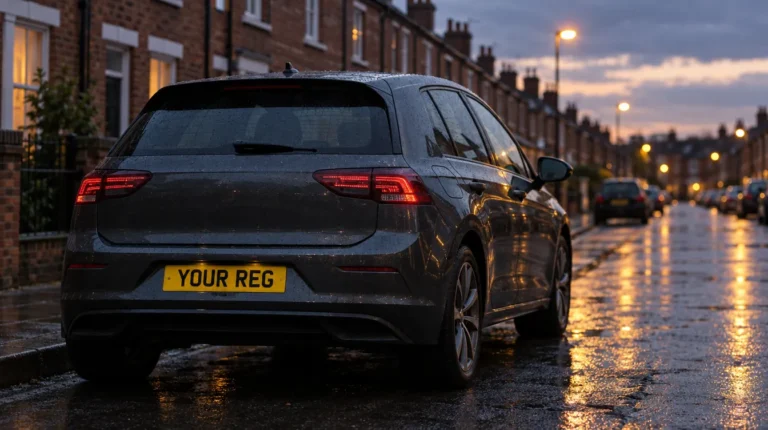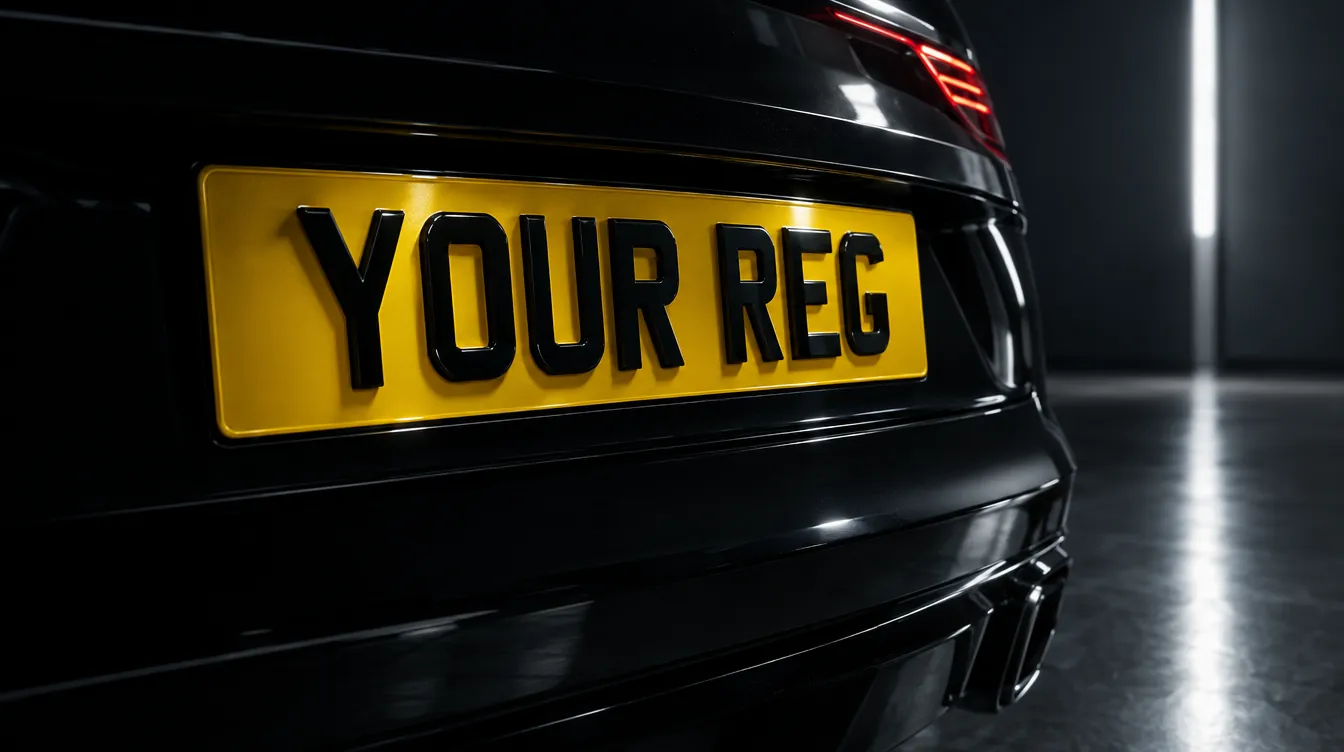
Short answer: yes. 3D gel, 4D laser-cut and 5D (4D with a gel top) number plates are legal on UK roads, provided the plate is made to the BS AU 145e standard and follows the same rules as a flat printed plate.
The confusion comes from the 2021 rule change. When BS AU 145e arrived on 1 September 2021, it banned the old two-tone “3D effect” printed plates – and lots of headlines mixed that up with raised plates. In fact, the new standard was the first to explicitly allow raised characters. This guide explains where the line sits.
In this guide
What counts as a 3D, 4D or 5D plate?
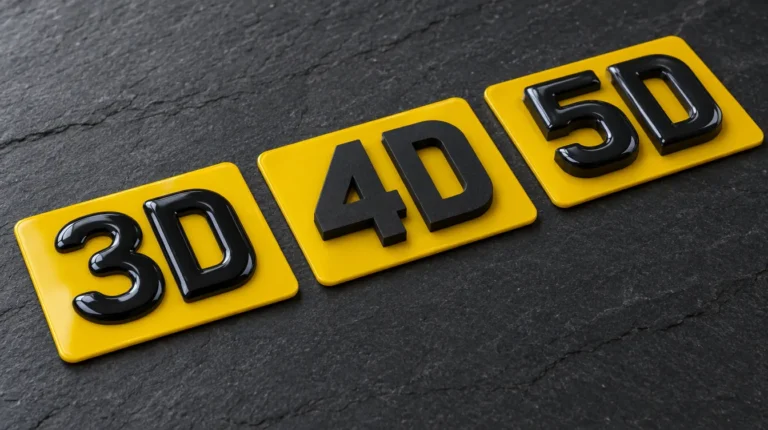
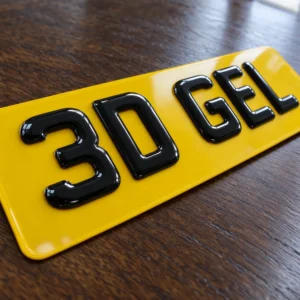
- 3D gel plates have each character printed and then covered in a clear, domed polyurethane resin. The dome makes them glossy and slightly raised.
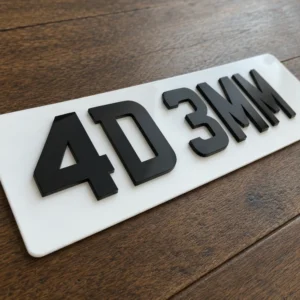
- 4D plates have characters laser-cut from black acrylic (usually 3mm or 5mm thick) and bonded onto the plate face, so they stand proud with crisp, square edges.
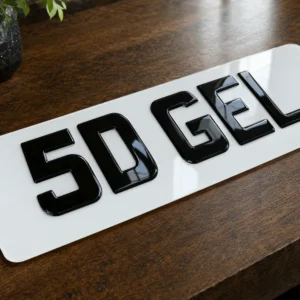
- 5D plates (sometimes called 4D gel) combine both: laser-cut acrylic characters topped with a domed gel layer for a deep, piano-black finish.
There’s no legal category called “4D” – it’s a trade name. The law simply asks whether the characters meet the rules. Our side-by-side comparison of 3D vs 4D vs 5D plates shows how they differ in looks and durability.
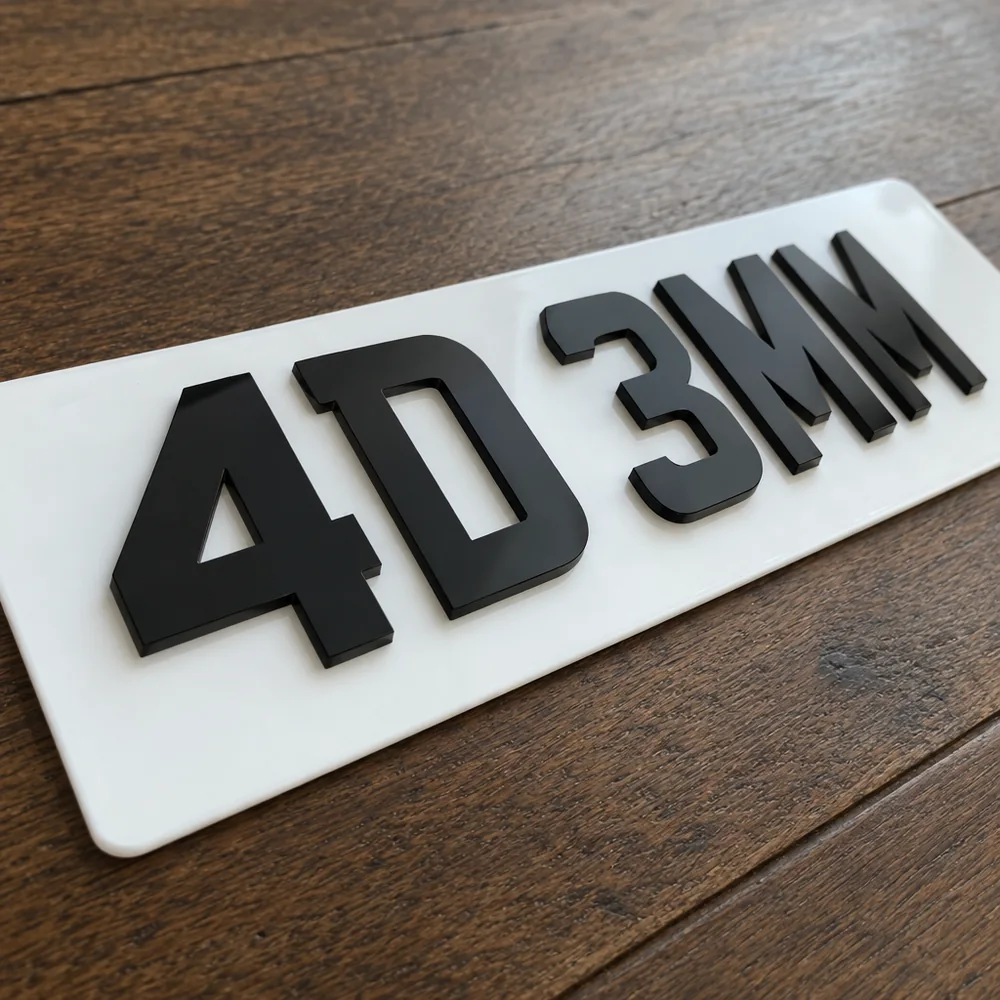
When are raised plates road legal?
A raised plate is legal when all of these are true:
- It’s made to BS AU 145e and marked with the supplier’s name, postcode and the standard number
- The characters are in the Charles Wright 2001 font at legal size (79mm tall on a car)
- The characters are a single shade of black – no grey shadows, outlines or two-tone effects
- The spacing is correct, with the two groups shown properly
- The plate face is white at the front and yellow at the rear and reflective
- It comes from a registered supplier who has checked your ID and entitlement
If any one of those fails, the whole plate fails. That’s why a “4D” plate bought from an unregistered seller with a stylised font or mis-spaced characters isn’t legal, however good it looks.

What makes a raised plate illegal?
These are the problems we see most often on 3D and 4D plates sold elsewhere:
| Problem | Why it’s illegal |
|---|---|
| Two-tone or grey “shadow” characters | Plates fitted since September 2021 must use one shade of black |
| Coloured 4D characters (red, blue, neon) | Characters on road plates must be black |
| Stylised or italic fonts | Only the Charles Wright 2001 font is permitted |
| Squeezed or moved spacing | Spacing is fixed – you can’t rearrange the groups |
| Carbon, honeycomb or patterned backgrounds | The background must be plain white or yellow |
| No supplier name or BS AU 145e mark | Every BS AU 145e plate must show both |
| Characters fixed so they could be removed | Characters must be permanently attached |
Coloured and patterned plates aren’t banned outright – they’re sold as show plates for display off the road. Our show plates are clearly labelled as not for road use.
Will 3D and 4D plates pass the MOT?
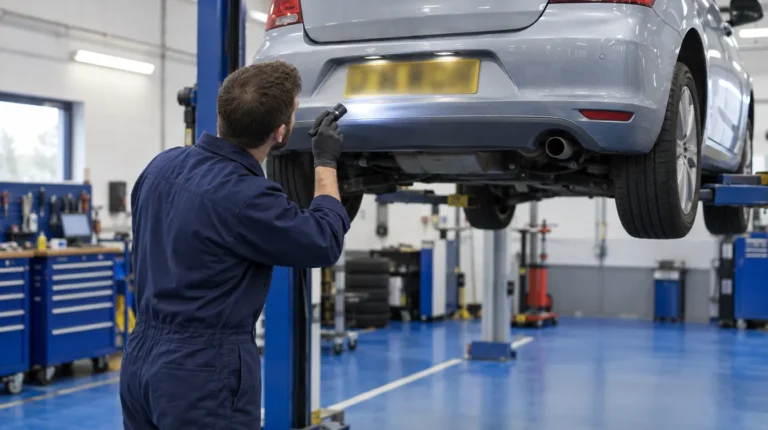
They will if they’re legal. MOT testers check that plates are secure, in good condition, the right colours, correctly formed and spaced, and not likely to be misread. They aren’t marking you down for raised characters as such.
They will fail a plate that has the wrong font, broken characters, bad spacing, a patterned background or faded and cracked sheeting. Our guide to number plate MOT failures lists every check.
Do ANPR and speed cameras read 4D plates?
A properly made raised plate is read by cameras just as easily as a printed one, because the characters are the same shape, size and colour. Problems arise with cheap acrylic that’s glossy enough to cause glare, with characters that have started to lift, or with plates that have been tampered with – which is a different and much more serious offence. We explain the law on anti-camera plates in ghost plates and tinted plates.
Good 4D plates avoid glare and lifting by using low-sheen acrylic, bonding characters with weatherproof adhesive and leaving the reflective plate face untouched around them.
Can I get fined for 4D plates?
Only if they’re illegal. The fine for a number plate that doesn’t meet the rules is up to £1,000, and police can also issue a vehicle defect rectification notice requiring you to replace them. A correctly made, BS AU 145e-marked 4D plate isn’t an offence. See illegal number plate fines for the full picture.
How to buy legal 3D or 4D plates
- Use a supplier that asks for your ID and V5C (or other entitlement document). That’s the clearest sign they’re registered.
- Check the plate preview shows the standard font and spacing – our plate builder won’t let you change either in road-legal mode.
- Make sure the finished plate carries the supplier’s name, postcode and BS AU 145e.
- Choose black characters only.
You can design all three raised styles here:
Frequently asked questions
Are 3D gel plates legal?
Yes. Domed gel characters are legal if they’re the standard font, size, spacing and a single shade of black on a BS AU 145e plate.
Are 5mm 4D plates legal, or only 3mm?
Both are made to BS AU 145e. What decides legality is the font, character size, colour, spacing and the plate itself – not whether the acrylic is 3mm or 5mm deep.
Were 3D plates banned in 2021?
No. What changed in 2021 was a ban on two-tone printed characters that only looked 3D. Genuinely raised characters became explicitly allowed under BS AU 145e.
Can my 4D plates have a coloured border?
We’d keep any border plain black and thin on a road-legal plate. Coloured borders, outlines and backgrounds belong on show plates.
Do I need to tell the DVLA or my insurer about 4D plates?
Legal plates aren’t a modification to the registration, so you don’t tell the DVLA. Some insurers ask about cosmetic changes – if in doubt, mention them.